SAMR
SAMR: Substitution, Augmentation, Modification, and Redefinition
 SOURCE FOR ABOVE PHOTO
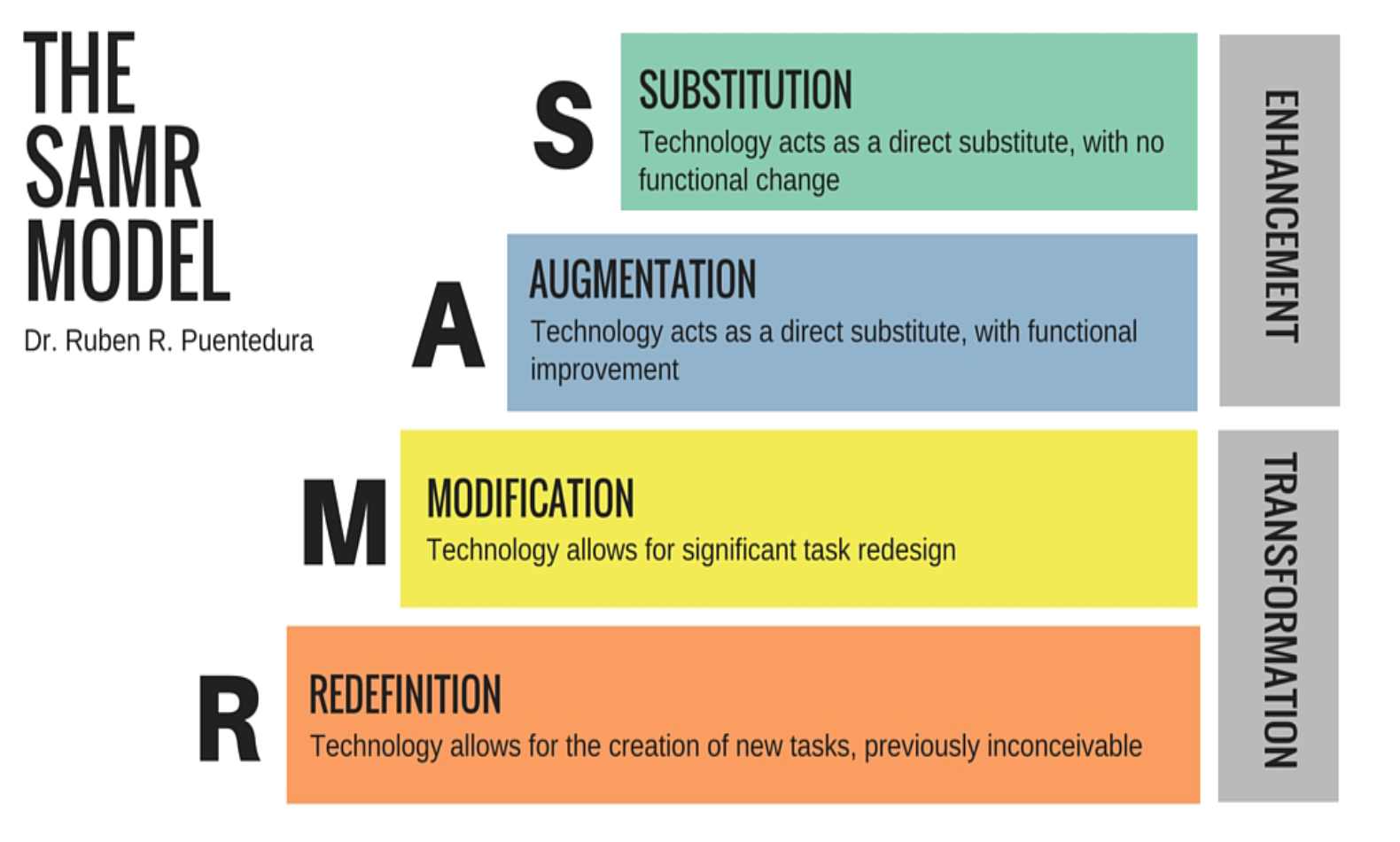
In education, SAMR stands for Substitution, Augmentation, Modification, and Redefinition. It is a framework created by Dr. Ruben Puentedura that helps educators evaluate how they are integrating technology into their teaching.
___________________________________
Hey, so I've been digging into this SAMR model stuff, and it's pretty cool how it breaks down tech integration without making it feel overwhelming. Back when I was with the OCSB in Ottawa, we were just starting to push more digital tools in the classroom, and now over here in Taiwan with Common Core, it's all about blending that into e-learning setups. Basically, SAMR stands for Substitution, Augmentation, Modification, and Redefinition, and it's like a ladder for how tech can enhance or totally transform learning, especially online.
In an e-learning environment, it starts simple with Substitution, where you're just swapping out old-school stuff for digital versions, like posting a worksheet as a Google Form instead of printing it. No big changes, but it makes things accessible anytime. Then Augmentation kicks in by adding bells and whistles, say embedding videos or links in that form so kids can click for extra help right there. Modification gets more exciting, redesigning the task itself, like having students collaborate in real-time on a shared doc to build a group project, which wouldn't fly as easily on paper. And Redefinition is the game-changer, creating stuff that was impossible before, like connecting with global peers for a virtual debate or using VR to explore historical sites.
I think it's super useful for e-learning because it pushes us beyond just surviving online teaching, like during the pandemic rushes, and into making lessons more engaging and student-centered. It reminds me that not every lesson needs to hit Redefinition, sometimes Augmentation is plenty to boost participation, especially with diverse learners here in an international school.
For an example, take a language arts lesson on persuasive writing. At Substitution, kids read articles online instead of from a textbook. Augmentation: add comment features for quick feedback. Modification: they use tools like Canva to create infographics with their arguments, incorporating multimedia. Redefinition: students produce a podcast episode pitching their ideas, share it on a class blog, and invite real audiences from other countries to respond via video calls. I've done something similar with my grade 5s here, and it lit them up way more than essays ever did.
If you're looking for a solid resource, check out this Edutopia article that dives deep with practical tips.Edutopia Link. It's got examples tailored to online shifts that align perfectly with SAMR.


Comments
Post a Comment